ERP for Manufacturing: Key Features and Benefits
How ERP helps manufacturers streamline production, cut costs, and scale smarter.
Manufacturing businesses deal with constant pressure-tight delivery timelines, rising costs, inventory challenges, and the need for consistent product quality. When processes are managed across spreadsheets, disconnected tools, or manual systems, mistakes are unavoidable.
This is where ERP for manufacturing becomes essential.
An ERP (Enterprise Resource Planning) system connects production, inventory, procurement, sales, finance, and quality management into a single platform. It helps manufacturers gain control, improve efficiency, and scale operations without chaos.
Let’s break down the key features and benefits of ERP for manufacturing in simple terms.
What Is ERP for Manufacturing?
ERP for manufacturing is software designed to manage and automate core manufacturing operations. It provides real-time visibility into production, materials, costs, and resources, helping manufacturers plan better and execute faster.
Instead of reacting to problems after they occur, ERP allows manufacturers to predict, prevent, and optimise operations.
Key Features of ERP for Manufacturing
Key Features Table
| Feature | Core Capabilities | Manufacturing Impact |
|---|---|---|
| Production Planning | Master scheduling, work orders, capacity tracking | Fewer delays, optimal resource use |
| BOM Management | Multi-level BOMs, revisions, material tracking | Cuts errors, wastage |
| Inventory/Warehouse | Real-time stock, auto-reorder, batch tracking | Prevents stockouts/overstock |
| Procurement | PO automation, supplier scoring | Better vendor terms, cost control |
| Quality Control | Stage inspections, compliance traceability | Consistent quality, audit-ready |
| Shop Floor Control | Live status, machine/labor tracking | Bottleneck fixes, higher throughput |
| Costing/Financials | Product costing, WIP, margin analysis | True profitability insights |
| Maintenance | Preventive scheduling, downtime tracking | Master scheduling, work orders, and capacity tracking |
1. Production Planning and Scheduling
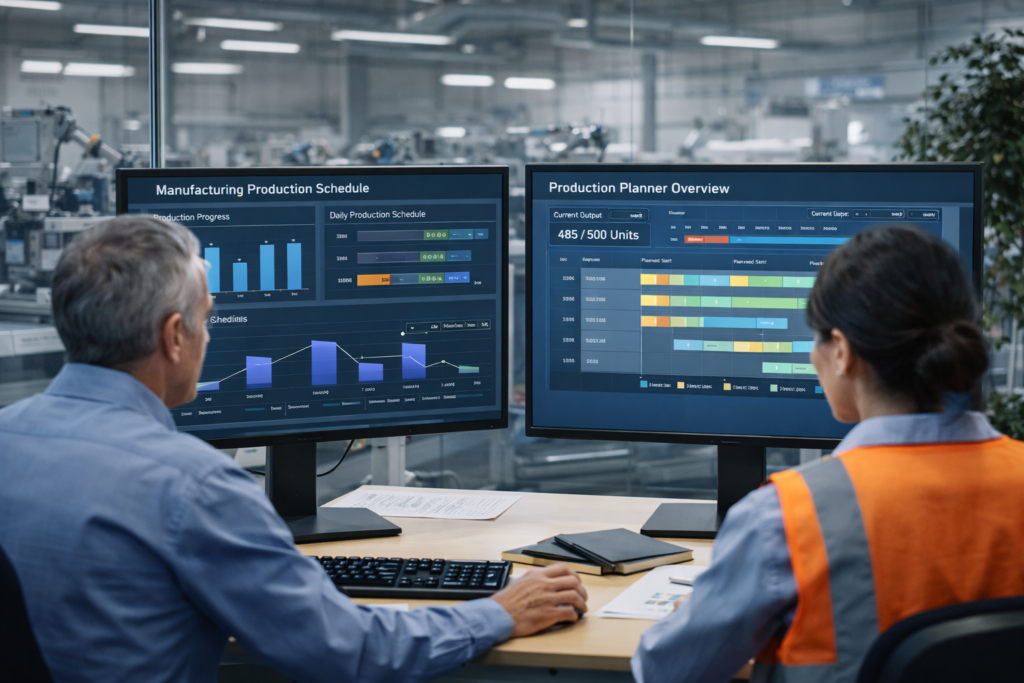
ERP helps manufacturers plan production based on demand, capacity, and material availability.
Key capabilities include:
- Master production planning
- Work order management
- Capacity planning
- Real-time production tracking
This ensures smoother workflows, fewer delays, and better use of machines and labour.
2. Bill of Materials (BOM) Management
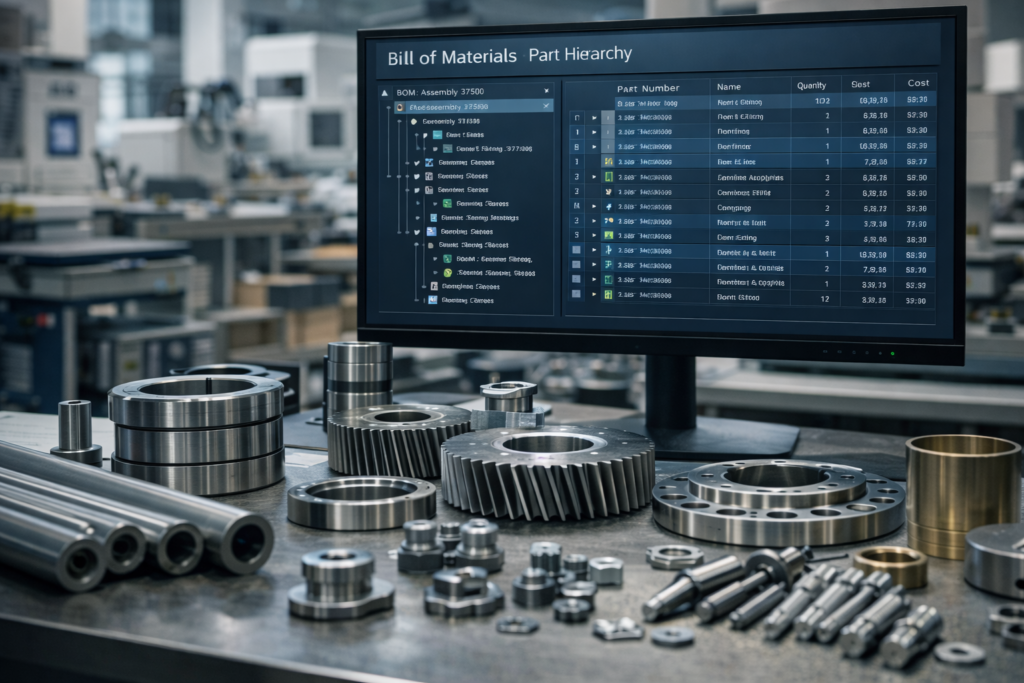
Managing complex Bills of Materials manually leads to errors and cost overruns.
ERP allows you to:
- Create multi-level BOMs
- Track raw materials and components
- Manage revisions and versions
- Control material consumption
This improves accuracy and reduces material wastage.
3. Inventory and Warehouse Management
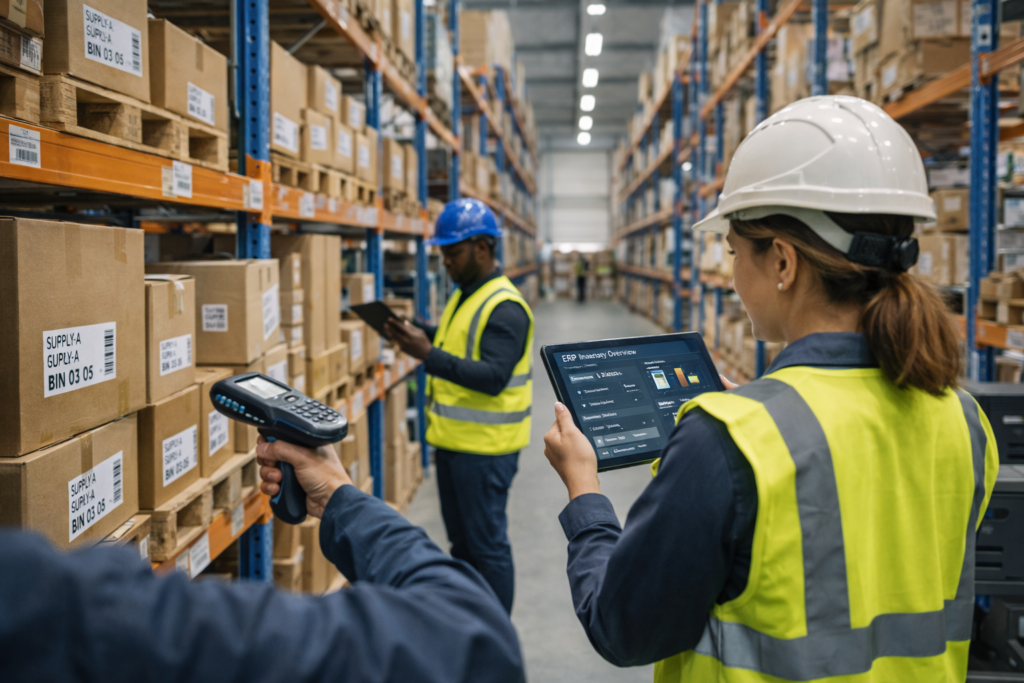
Manufacturers must balance stock availability without overstocking.
ERP provides:
- Real-time inventory tracking
- Automated stock reordering
- Batch and serial number tracking
- Warehouse location management
The result is fewer stockouts, reduced carrying costs, and better inventory control.
4. Procurement and Supplier Management
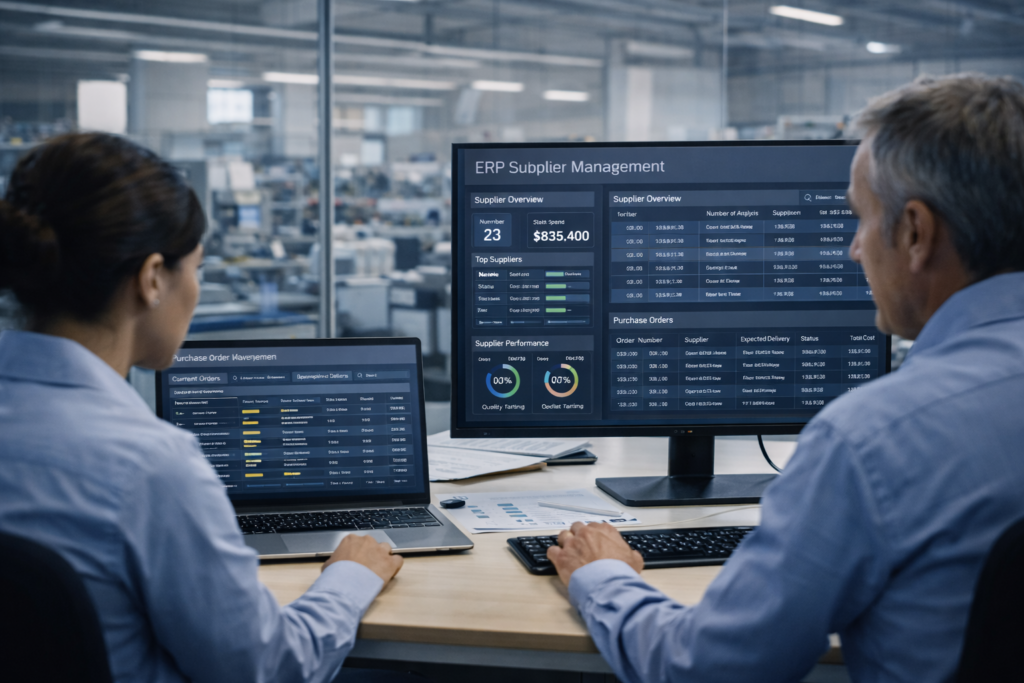
ERP streamlines the entire procurement process, from purchase requests to supplier payments.
Key benefits:
- Automated purchase orders
- Supplier performance tracking
- Cost comparisons and vendor history
- Better negotiation and planning
This leads to improved supplier relationships and controlled procurement costs.
5. Quality Control and Compliance
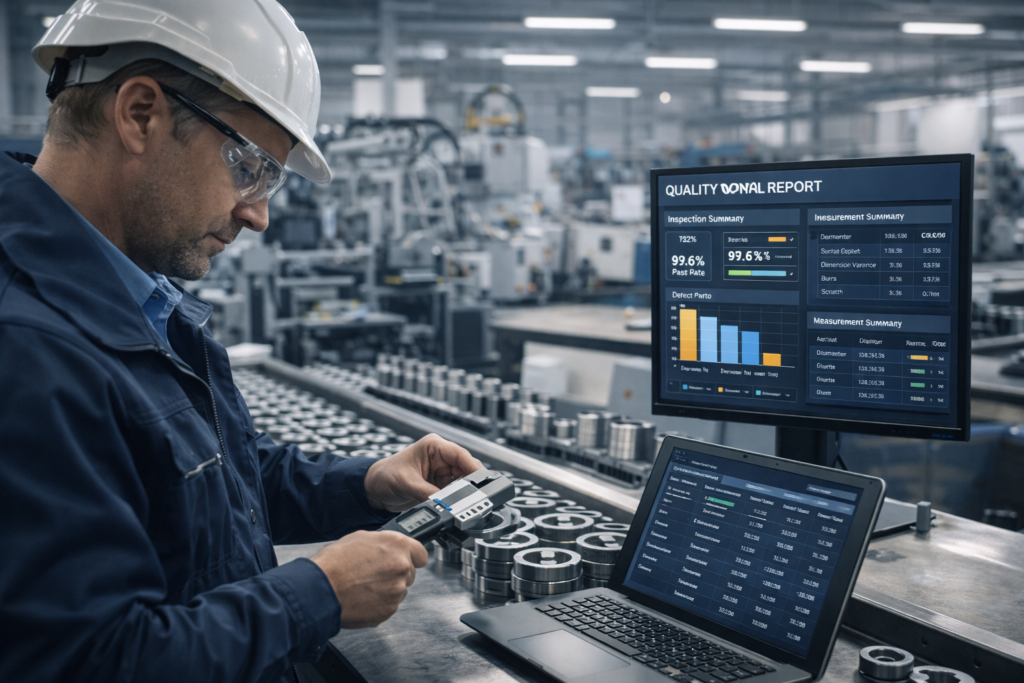
Maintaining product quality is critical in manufacturing.
ERP helps with:
- Quality checks at each production stage
- Inspection reports and approvals
- Compliance with industry standards
- Traceability for audits and recalls
This ensures consistent quality and reduces the risk of rework or returns.
6. Shop Floor Control
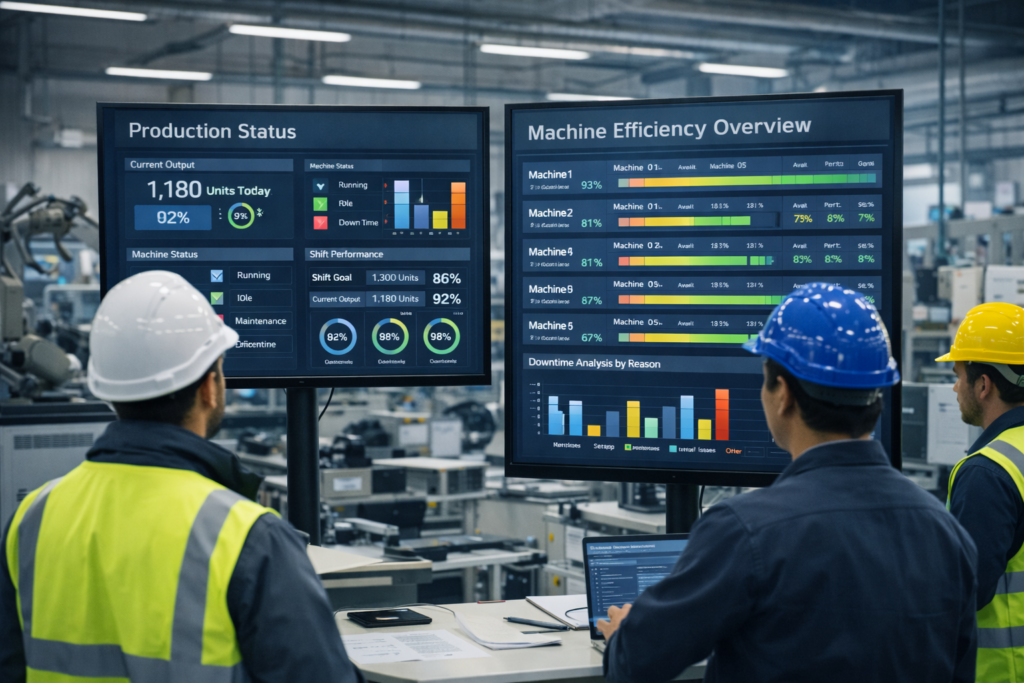
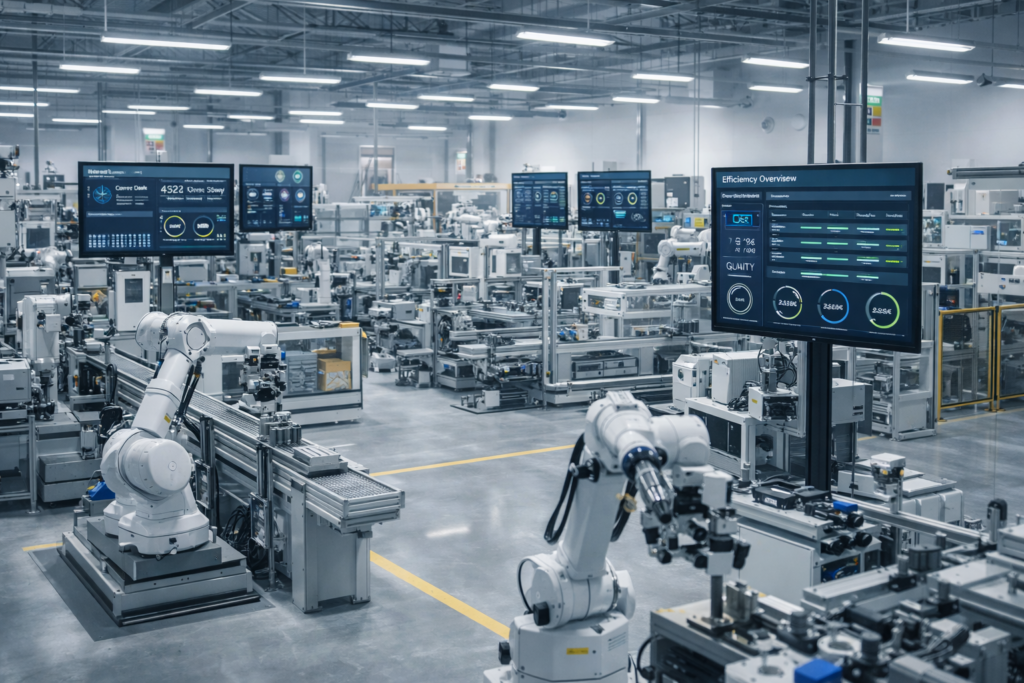
ERP connects the shop floor with management.
Features include:
- Real-time production status
- Machine utilization tracking
- Labor time tracking
- Downtime and efficiency analysis
This visibility helps improve productivity and reduce bottlenecks.
7. Costing and Financial Management
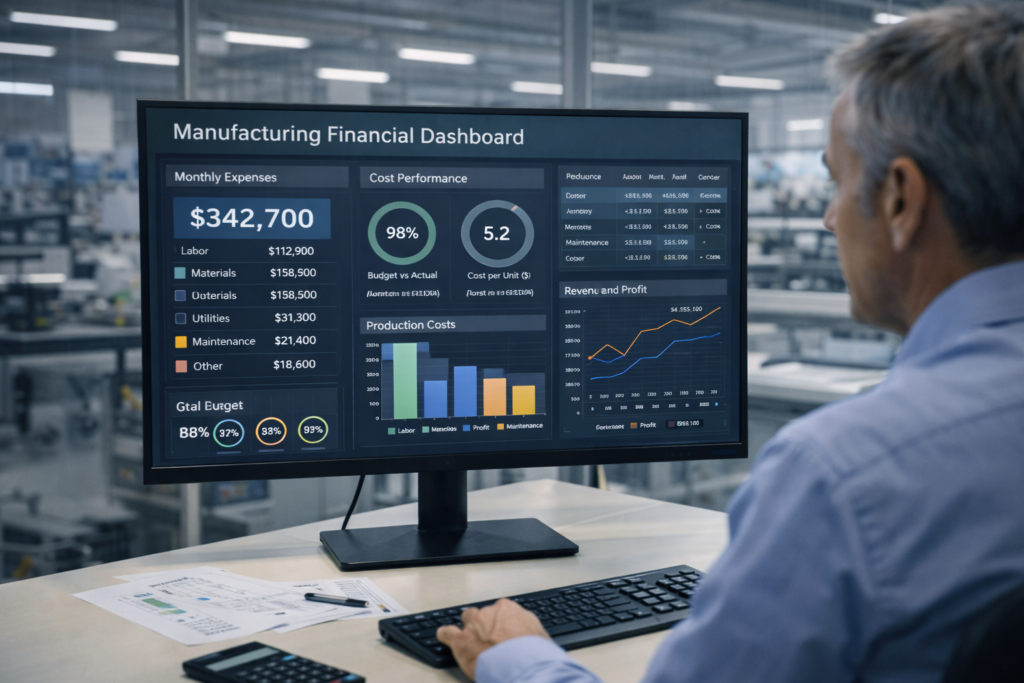
Understanding true production costs is essential for profitability.
ERP provides:
- Accurate product costing
- Work-in-progress (WIP) tracking
- Expense and margin analysis
- Real-time financial reporting
Manufacturers gain better cost control and clearer profitability insights.
8. Maintenance Management
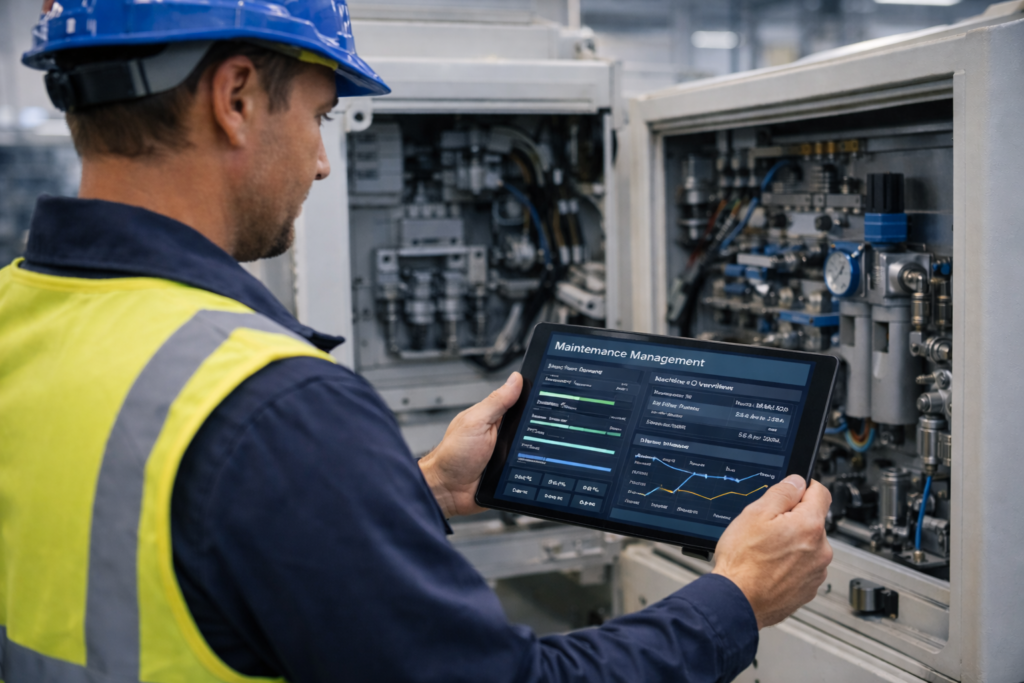
Unplanned machine breakdowns are expensive.
ERP supports:
- Preventive maintenance scheduling
- Equipment performance tracking
- Maintenance history and costs
- Reduced downtime
This extends asset life and keeps production running smoothly.
Benefits of ERP for Manufacturing Businesses
Manufacturing ERP Benefits
| Benefit | Outcome | Link to Features |
|---|---|---|
| Operational Efficiency | Faster, error-free workflows | Automation across planning/inventory |
| Production Visibility | Real-time status monitoring | Shop floor + dashboards |
| Cost/Waste Reduction | Optimized materials, less rework | BOM + inventory control |
| On-Time Delivery | Demand-driven scheduling | Production planning |
| Data-Driven Decisions | KPI dashboards, analytics | All integrated data |
| Scalability | Easy expansion for new lines/locations | Modular system design |
| Customer Satisfaction | Reliable quality/fulfilment | Optimised materials, less rework |
1. Improved Operational Efficiency
By automating processes and connecting departments, ERP eliminates manual work and duplication. Operations become faster, smoother, and more reliable.
2. Better Production Visibility
Real-time data allows manufacturers to monitor production status, material usage, and delivery timelines without chasing updates across teams.
3. Reduced Costs and Waste
Accurate planning and inventory control reduce material wastage, rework, and unnecessary expenses.
4. On-Time Delivery
With better scheduling and demand planning, manufacturers can meet customer deadlines more consistently.
5. Data-Driven Decision Making
ERP dashboards and reports help managers make informed decisions based on real data, not assumptions.
6. Scalability for Growth
As manufacturing operations grow, ERP scales easily by supporting:
7. Improved Customer Satisfaction
Better planning, quality control, and on-time delivery result in happier customers and stronger long-term relationships.
Why ERP Is Essential for Modern Manufacturing
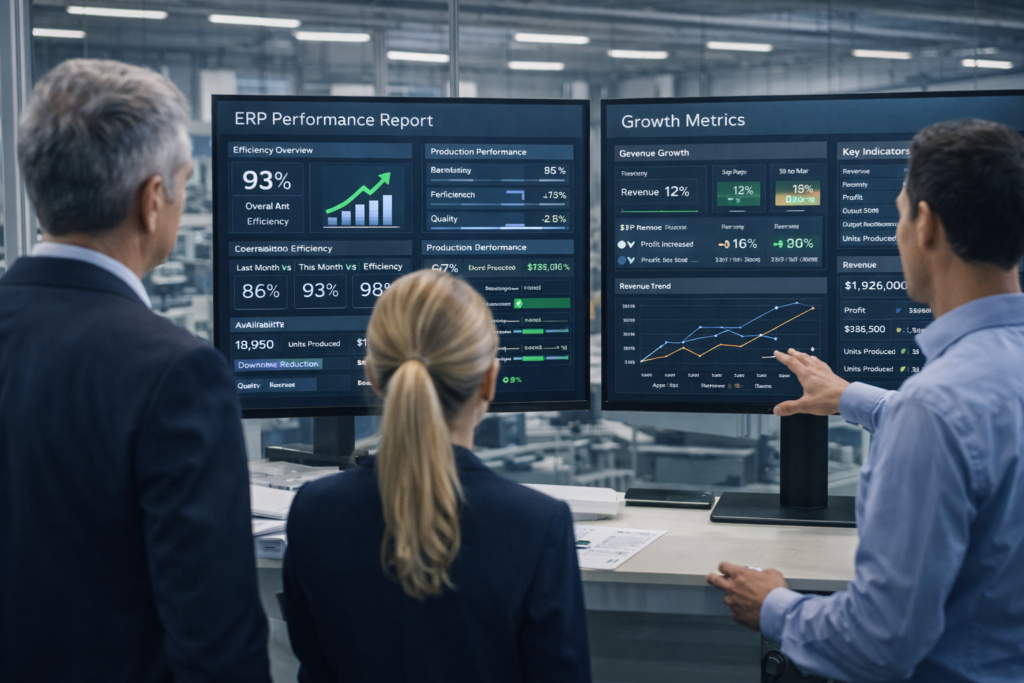
Manufacturing today is more competitive than ever. Customers expect speed, quality, and transparency. ERP helps manufacturers move from reactive operations to proactive, data-driven manufacturing.
Whether you run a small factory or a growing manufacturing enterprise, ERP provides the foundation needed for long-term success.
Conclusion
ERP for manufacturing is no longer optional. It is a strategic tool that improves production efficiency, reduces costs, ensures quality, and supports scalable growth.
By implementing the right ERP system, manufacturers gain control over operations, improve decision-making, and stay competitive in an evolving market.
FAQs
Question: What is BOM management in manufacturing ERP?
Answer: Multi-level Bills of Materials tracking cuts material waste and errors.
Question: How does ERP improve production scheduling?
Answer: Real-time capacity/demand planning prevents delays and optimises resources.
Question: Key manufacturing ERP benefits?
Answer: Cost reduction (20-30%), on-time delivery, quality control, and scalability.
Question: Shop floor control ERP features?
Answer: Live machine/labour tracking, downtime analysis for throughput gains.