Marketplace vs Own Website: What’s Better for Indian Sellers in 2026?
Choosing between a marketplace and your own website will define your margins, brand control, and long-term growth in 2026. Discover which model gives Indian sellers more profit, ownership, and scalability.
In 2026, Indian sellers are standing at a turning point. Ecommerce is growing rapidly, competition is increasing, and margins are under pressure. The real question is no longer about starting online. It is about scaling profitably.
When comparing Marketplace vs Own Website, the decision directly impacts brand value, customer ownership, and long-term growth.
The Rise of Ecommerce in India
India’s e-commerce market is projected to cross $120 billion and continue expanding rapidly toward 2030. At the same time, Direct-to-Consumer (D2C) brands are growing faster than traditional marketplace-only sellers.
This shift shows one clear trend. Sellers want more control over their brand and customers.
Why Marketplaces Still Attract Sellers
Marketplaces like Amazon and Flipkart provide immediate access to millions of buyers. Sellers can list products quickly and start receiving orders without building their own traffic system.
The advantages include built-in trust, logistics support, and ready customer demand. For new businesses, this reduces the entry barrier.
However, growth on marketplaces comes at a cost.
Commission and Cost Structure
Marketplace selling includes several fees. Commission often ranges from 5% to 20%, depending on the category. Additional costs include shipping, advertising, and fulfillment charges.
To understand the difference clearly, look at this simplified comparison.
| Factor | Marketplace | Own Website |
|---|---|---|
| Platform Commission | 5%-20% | 0% |
| Payment Gateway Fee | Included or extra | 1.5%-3% |
| Advertising Cost | Optional but competitive | Required for traffic |
| Branding Control | Limited | Full |
| Customer Data Access | Restricted | Fully owned |
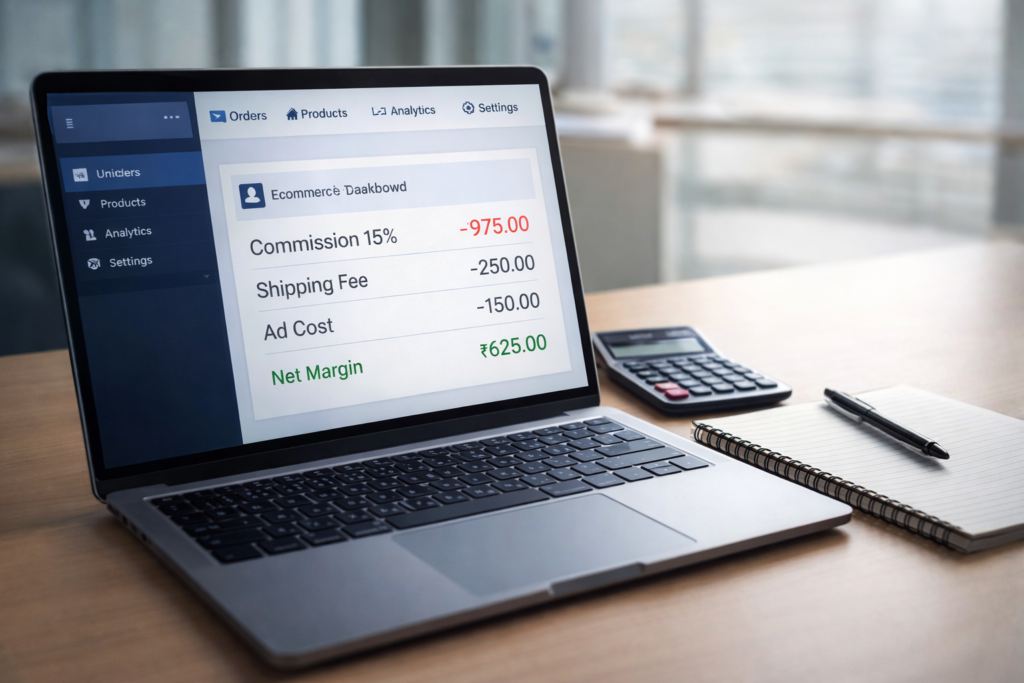
While marketplace commissions may appear manageable, combined costs can significantly impact net margins.
Real Margin Example
Let us assume a product sells for ₹1,000 and costs ₹400 to manufacture.
Marketplace Scenario
Commission (15%) = ₹150
Shipping and other fees = ₹50
Total cost before product = ₹200
Final profit = ₹1,000 – ₹200 – ₹400
Final profit = ₹400
Own Website Scenario
Payment gateway (2%) = ₹20
Marketing per order = ₹120
Other costs = ₹50
Total cost before product = ₹190
Final profit = ₹1,000 – ₹190 – ₹400
Final profit = ₹410
The difference per order seems small. However, the real power of an own website appears in repeat purchases. Once a customer is acquired, the next sale often costs much less. This increases lifetime value and improves profitability.
Branding and Customer Ownership
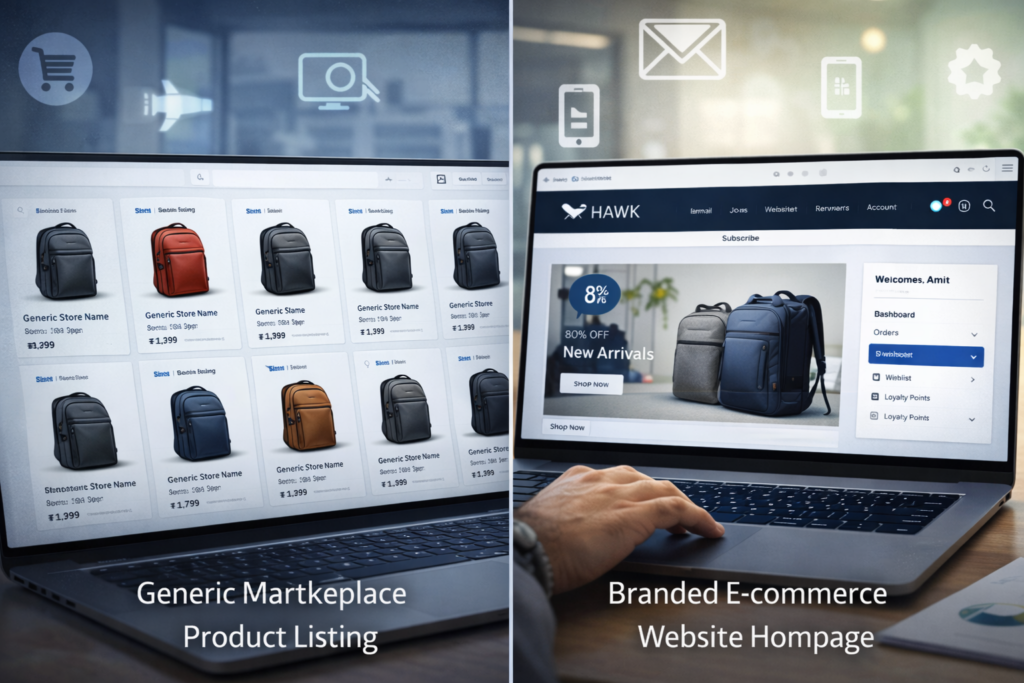
Branding is becoming a major competitive advantage in 2026. On marketplaces, customers remember the platform more than the seller. This weakens brand recall and reduces loyalty.
With an own website, sellers control the entire customer experience. From design to messaging, every touchpoint strengthens brand identity.
Customer data is even more critical. Marketplaces do not provide complete customer insights. Without direct access to email addresses, phone numbers, and purchase behavior, remarketing becomes limited.
On an own website, sellers collect and control valuable customer data. This enables personalized campaigns, subscription models, and long-term retention strategies.
Long-Term Scalability
Marketplace growth depends on algorithms and platform policies. Sudden changes in ranking or commission can impact revenue instantly.
Website growth, on the other hand, compounds over time. With owned traffic, email lists, and direct communication channels, businesses can scale sustainably.
Investors also value brands that own their customers rather than depend entirely on third-party platforms.
The Smart Hybrid Approach

The most practical strategy for Indian sellers in 2026 is a hybrid model. Marketplaces can be used for visibility and new customer acquisition. Own websites can focus on higher margins, branding, and retention.
This approach reduces dependency while maximizing reach.
How Pinecart Helps Sellers Shift Control
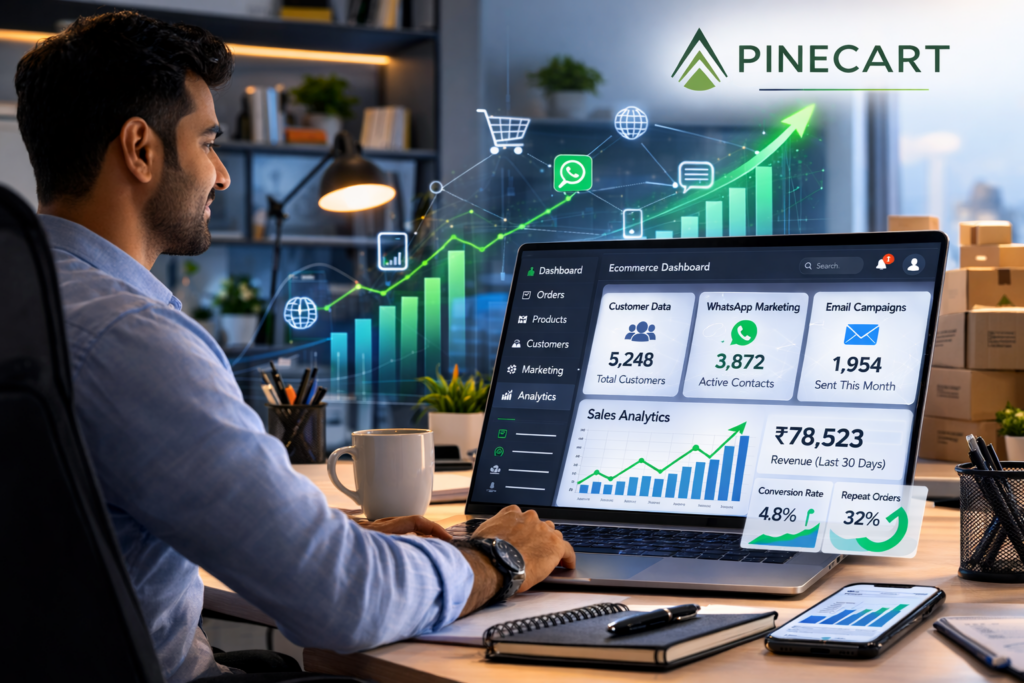
Many sellers understand the importance of owning a website but hesitate due to technical challenges. Setting up, managing payments, and running marketing campaigns can feel complex.
Pinecart simplifies this process for Indian businesses. It allows sellers to launch a fully branded store without heavy technical knowledge. Sellers can own their customer data, avoid high marketplace commissions, and integrate marketing channels like WhatsApp and email from one platform.
Instead of renting customers from marketplaces, sellers can build direct relationships. This shift improves margins and long-term business valuation.
Final Conclusion
Marketplace vs Own Website is not just a comparison of fees. It is a comparison of control, data, and future scalability.
Marketplaces help sellers start quickly. Own websites help them scale sustainably.
In 2026, the strongest Indian sellers will not depend on one channel alone. They will build systems that combine visibility with ownership.
The real question is simple. Are you building short-term sales, or long-term brand value?
FAQs
Que: Is selling on marketplaces still profitable in 2026?
Ans: Yes, marketplaces are profitable for quick visibility and customer acquisition. However, high commissions and limited customer data reduce long-term margins.
Que: Why is owning a website important for Indian sellers?
Ans: One’s own website gives full control over branding, pricing, and customer data. It helps increase repeat purchases and long-term profitability.
Que: What is better for scaling: marketplace or own website?
Ans: Marketplaces help you start fast. Own websites help you scale sustainably through data ownership and customer retention.
Que: Can sellers use both the marketplace and their own website?
Ans: Yes, a hybrid model works best. Marketplaces drive visibility, while your own website builds brand value and higher margins.