Top Reasons Why Many ERP Implementations Fail
By studying documented cases of ERP failures, organizations can learn from these mistakes and take steps to prevent similar issues in their own implementations.
ERP implementations challenge organisations, with up to 70% facing partial or full failure due to poor execution. These flops damage reputations, finances, and operations, yet studying them prevents repeats
High-profile disasters from giants like Hershey’s amplify fears, despite ERP’s proven benefits when done right.
Why Implementations Fail
Failures stem from poor planning, underfunding, weak leadership, bad change management, skimpy training, rushed testing, secrecy, vague timelines, and messy data migration. Multiple factors often compound.
Why do ERP implementations fail?
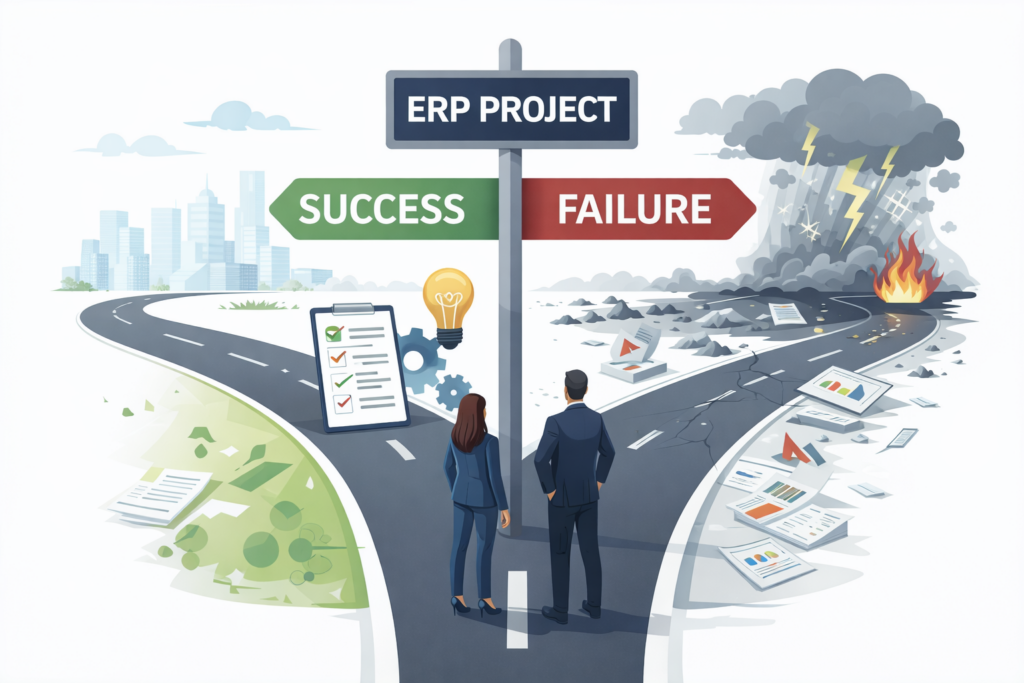
ERP implementation failures often gain notoriety due to highly publicised cases involving big corporations. These instances, which can lead to legal battles, diminished market credibility, and plummeting stock prices, contribute to the negative perception surrounding ERP projects.
However, not all ERP implementations need to end in chaos. By studying documented cases of ERP failures, organisations can learn from these mistakes and take steps to prevent similar issues in their own implementations.
The Causes of an ERP Implementation Failure
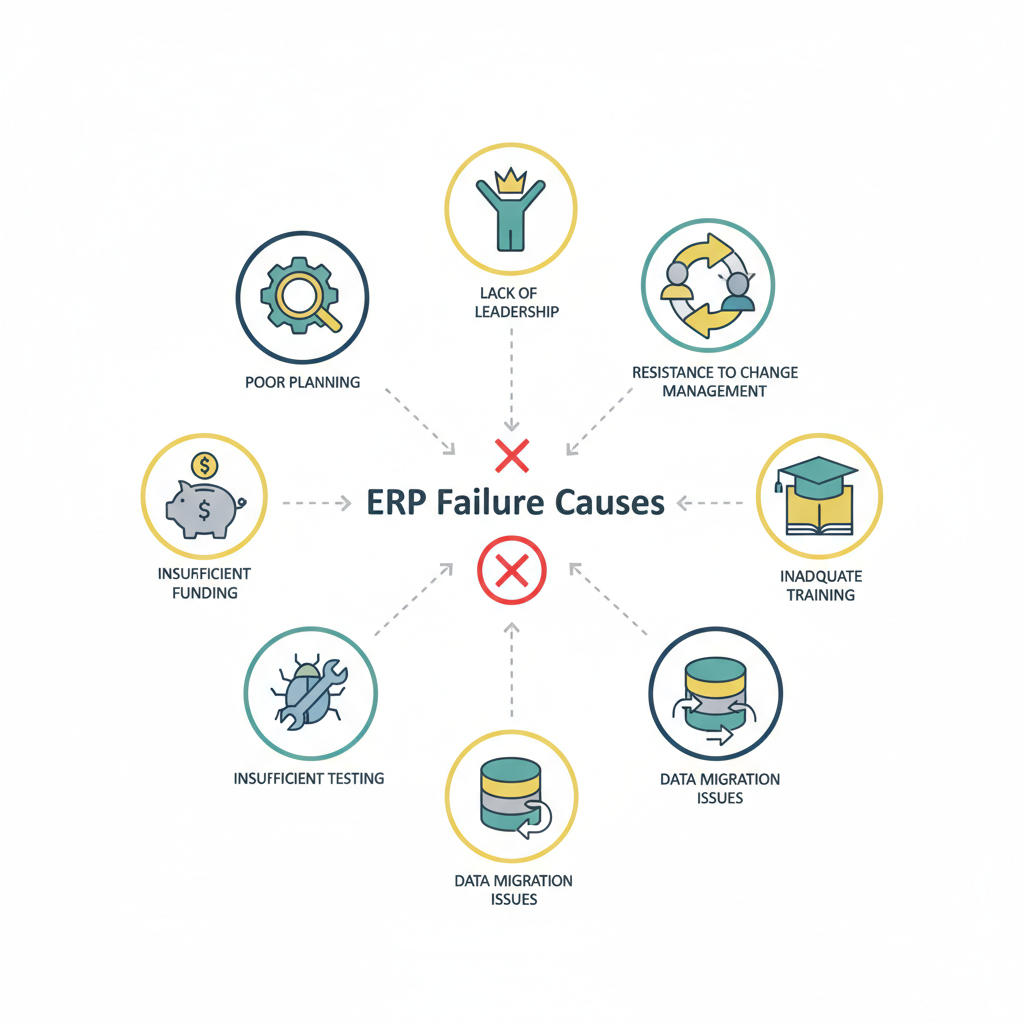
Several recurring causes contribute to ERP implementation failures, such as a lack of understanding of system and business requirements, insufficient funding and resources, a lack of leadership commitment, inadequate change management, limited or absent end-user training, insufficient testing, a lack of organisational transparency, inadequate project planning, and failure to map, import, and cleanse legacy data.
The complexity of the ERP implementation process often means that multiple factors contribute to project failure. To increase the likelihood of success, organisations should address these common causes and tailor their approach to their unique ERP software and organisational needs.
Budget Shortfalls: Underestimate ongoing costs; build in buffers for support
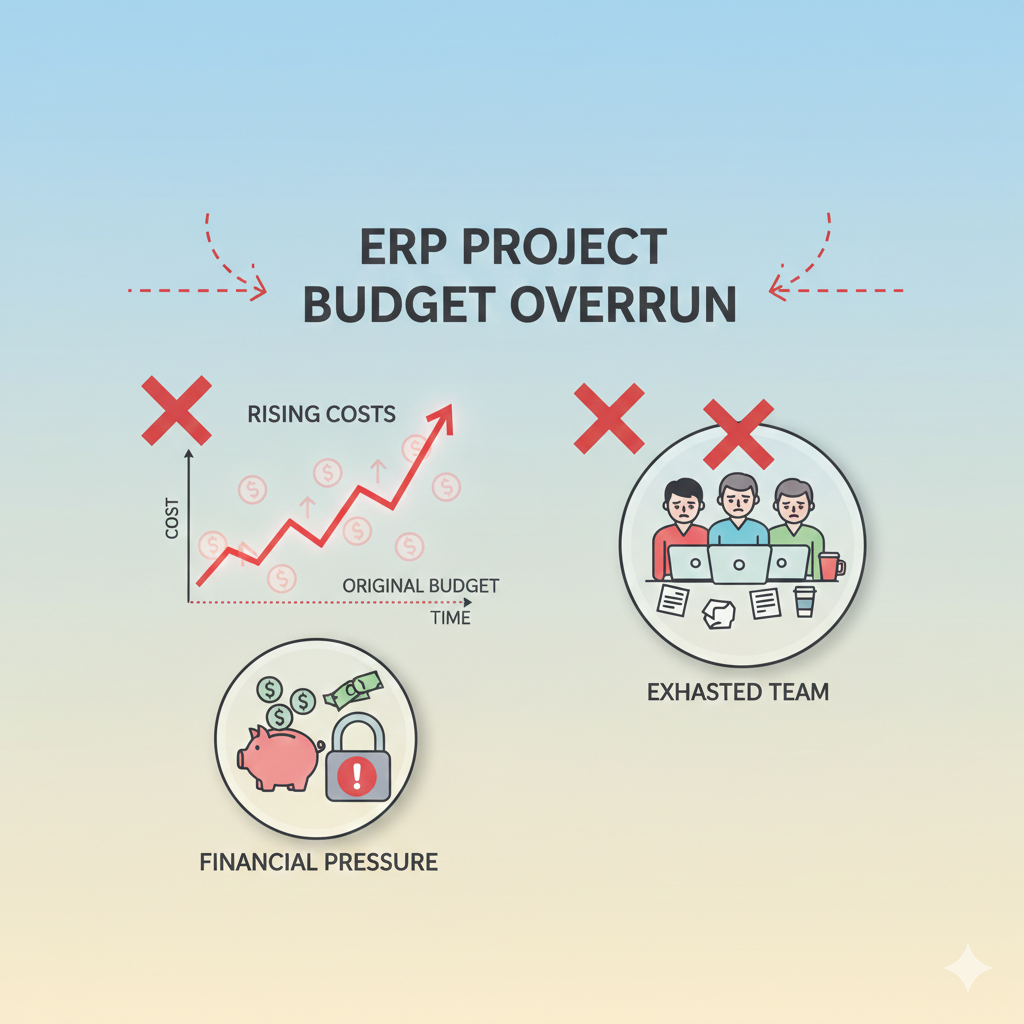
Lack of funding and resources is a common challenge, as ERP systems often incur costs both before and after successful implementation. Optimistic financial forecasts can lead to budget overruns. It’s important to find a solution within the designated budget while accounting for potential ongoing support post-implementation.
No Leadership Buy-In: Resistance kills momentum; leaders must champion adoption

Lack of leadership commitment becomes evident through internal resistance, signalling potential failure. Even though it’s possible to launch new software without committed leadership, it may hinder reaping all the benefits of digital transformation, as end users may remain unmotivated to switch to the new software.
Poor Change Management: Skip it to save cash, lose user buy-in

Inadequate change management is a cost-saving opportunity often overlooked during significant software rollouts. Properly organised change management ensures that individual transitions are supported, contributing to the success of ERP implementation by facilitating user adoption.
Inadequate Training: Users flounder, dropping productivity and data quality

Insufficient end-user training is a critical factor affecting ERP system effectiveness. Without adequate training, there’s a risk of decreased productivity and data accuracy as users struggle with unfamiliar software.
Lack of Transparency: Hidden goals breed misalignment
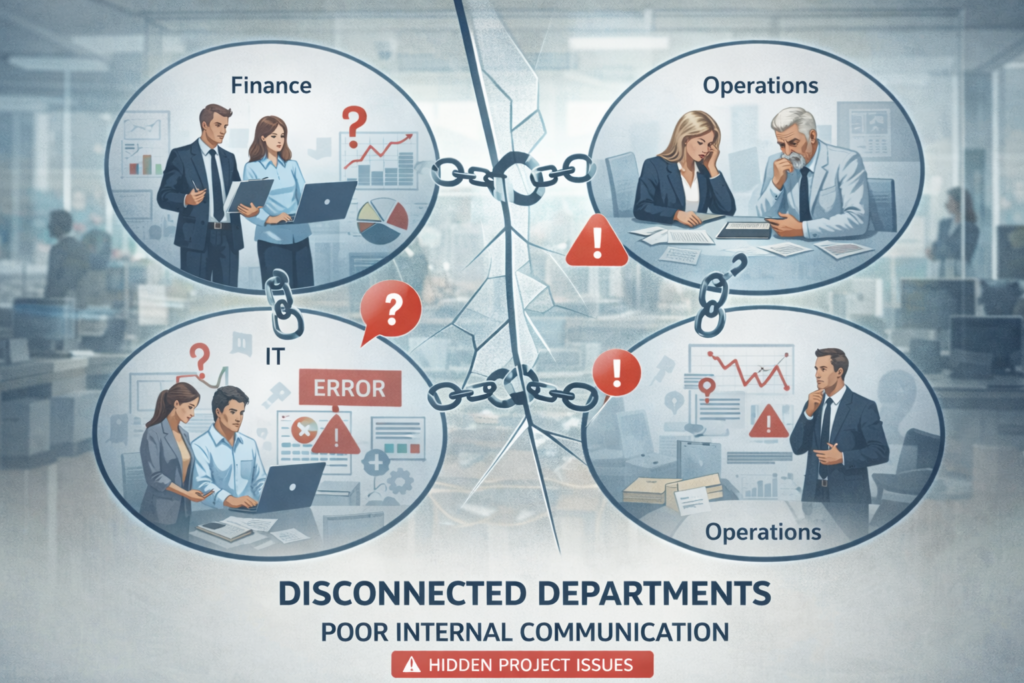
Lack of organisational transparency involves critical mistakes during software rollout processes. Clear communication of project goals and timelines internally is essential, along with maintaining an open and transparent log of the entire process. This ensures alignment across departments and facilitates adaptability to any changes within the core team.
Vague Planning: Leads to access errors and bad data decisions
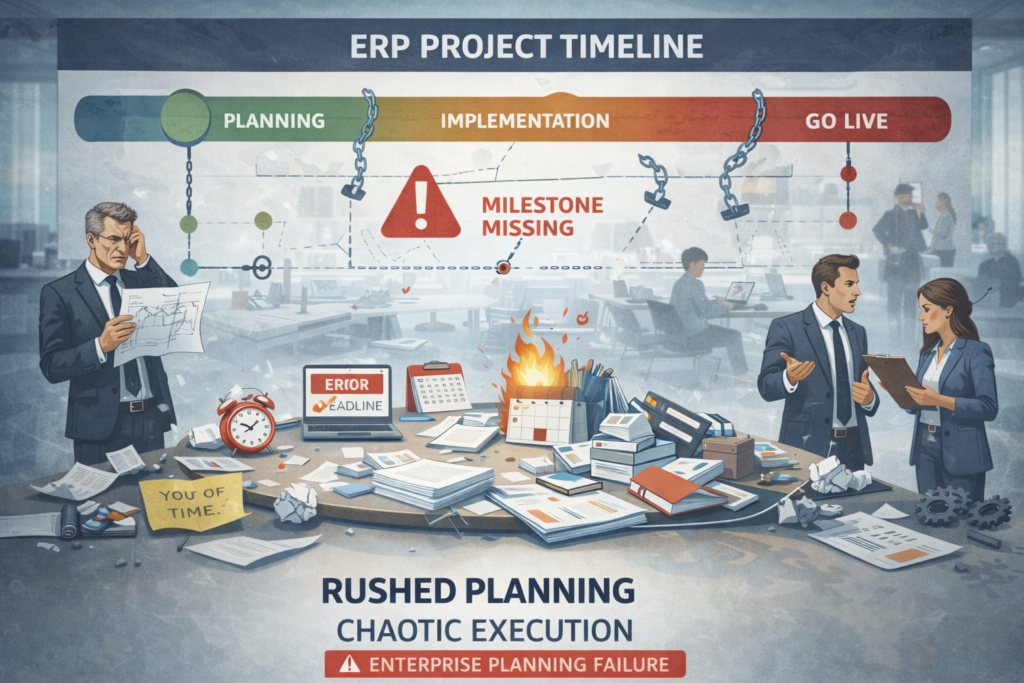
Insufficient project planning can result in overlooked aspects of ERP implementation. Rushing the planning phase may lead to problems post-launch, such as wrong access permissions, end users not utilising the software efficiently, and decision-making based on inaccurate data.
Data Migration Fails: Dirty legacy data skews insights
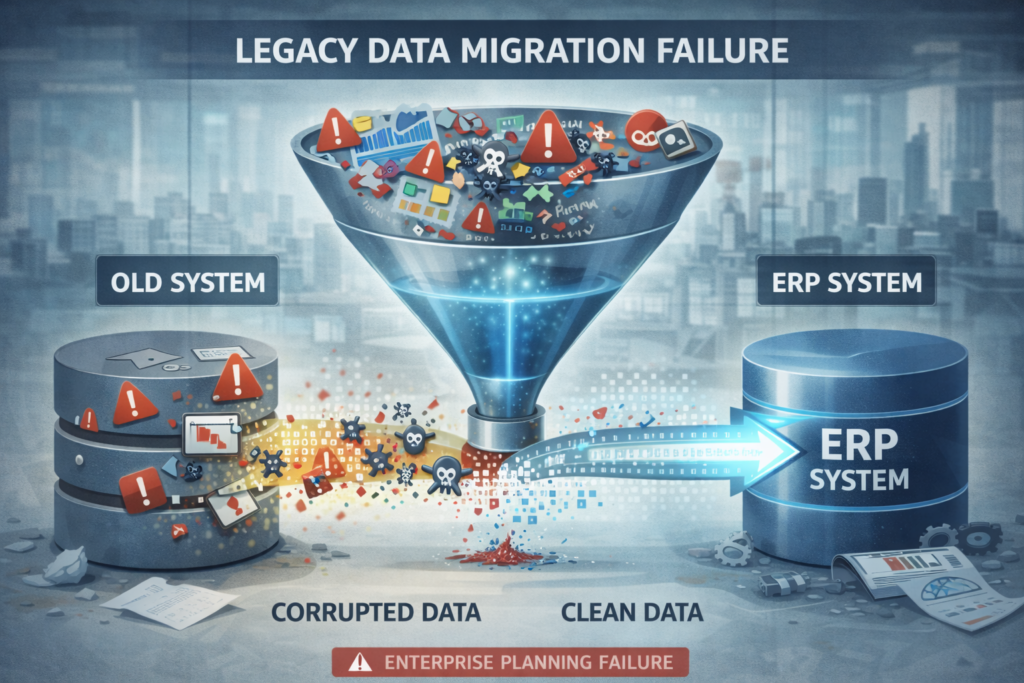
Failure to map, import, and cleanse legacy data is rare, given the existence of pre-existing data during ERP implementation. Understanding the types and historical management of existing data is crucial for reaping the benefits of the new system and avoiding skewed data or missing historical insights.
Learning from the mistakes of others is crucial in preparing for a successful ERP implementation, irrespective of the organisation’s size. Examining case studies of ERP implementation failures provides valuable insights into potential pitfalls and helps in better planning.
Case Studies Exhibiting Failed ERP Implementations
| Company | Year | Primary Issue | Outcome | Lesson |
|---|---|---|---|---|
| Target Canada | 2013 | Insufficient Training | Supply chain collapse from bad data entry | Productivity plummets from resistance |
| Lidl | 2010s | Transparency & Data Migration | €500M scrapped SAP project | Align customisation, steady leadership |
| Mission Produce | Recent | Requirements Mismatch | Inventory loss, $4M consultant fees | Map business needs fully upfront |
| Levi Strauss | 1990s | Inadequate Change Management | Productivity plunge from resistance | Prepare staff for transitions |
| Hershey’s | 1999 | Poor Planning/Testing | Halloween shipment fails, sales drop | Test thoroughly pre-peak |
| Nike | 2000s | Integration & Resistance | Supply chain glitches | Productivity plummets from resistance |
How To Avoid A Failed ERP Implementation

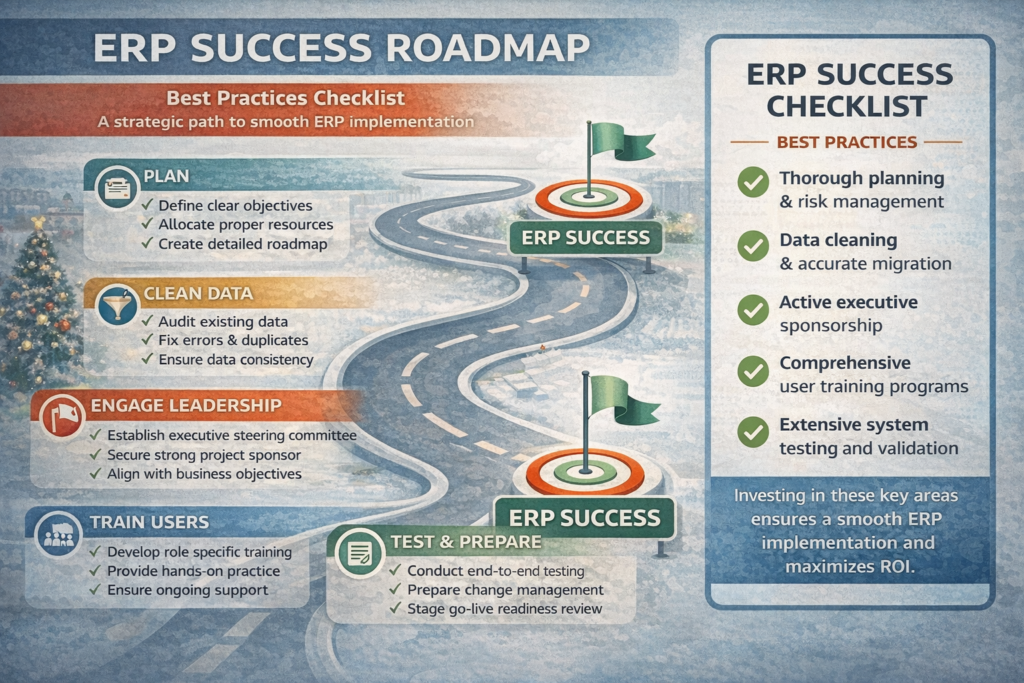
To avoid falling victim to an ERP implementation failure, it is crucial to carefully choose the right ERP system. While implementing an ERP system involves substantial effort, addressing the issues mentioned earlier can help alleviate stress, especially considering the significant benefits that follow a successful implementation.
Your company stands to gain substantial advantages across various aspects when the ERP implementation is executed well. Consider allowing our team of solution experts to explain our ERP implementation methodology.
Opt for Droot’s ERP solutions tailored for your process manufacturing business, drawing on the experience and expertise of implementations, making it a great choice to go for. Connect with us to learn more or schedule a free demo by clicking here!
FAQs
Question: What percentage of ERP projects fail?
Answer: Up to 70% face partial/full failure from poor planning, training gaps, or data issues.
Question: What caused Target Canada’s ERP failure?
Answer: Insufficient end-user training led to supply chain collapse via bad data entry.
Question: How to avoid ERP implementation failure?
Answer: Phased planning, leadership buy-in, rigorous testing, change management, and data cleansing.
Question: What are common ERP failure causes?
Answer: Weak requirements, budget shortfalls, no transparency, rushed testing, poor change management.