What Is ERP? A Complete Guide for Modern Businesses in 2026
ERP helps businesses manage operations through a single, integrated platform for better control and growth.
ERP helps businesses manage operations on a single, integrated platform, enabling better control and growth. Growing businesses outgrow spreadsheets and disconnected tools that slow daily operations. ERP unifies core processes into one system.
In complex markets, ERP keeps companies efficient and competitive. Choosing the right ERP shapes long-term performance.
This guide covers ERP basics, deployment models, and business applications. Learn how ERP connects operations as your business backbone.
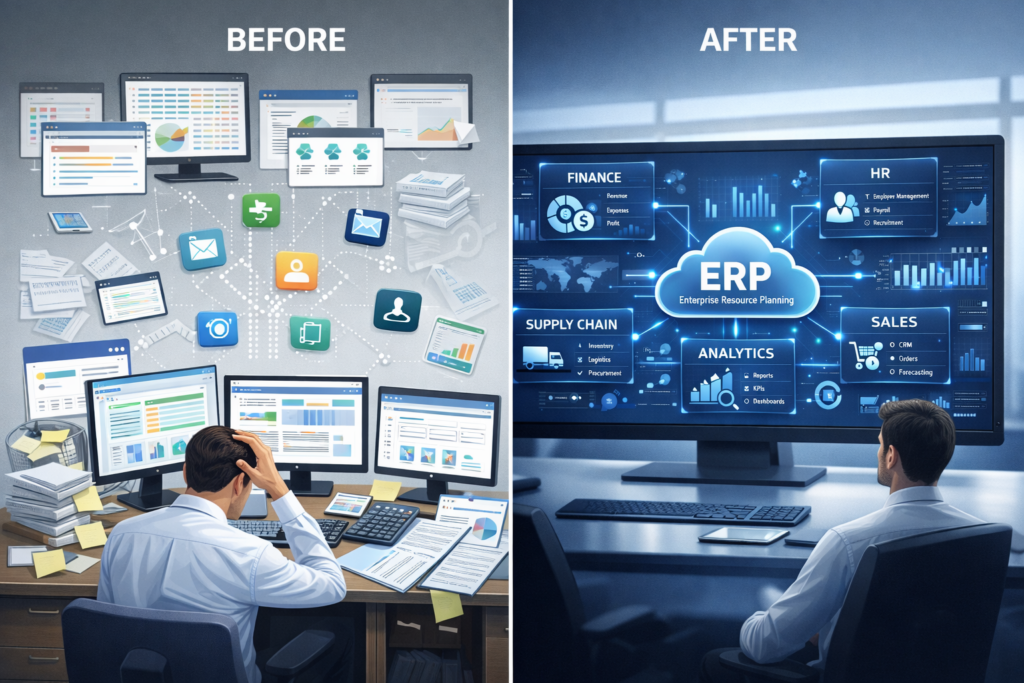
What is ERP software?
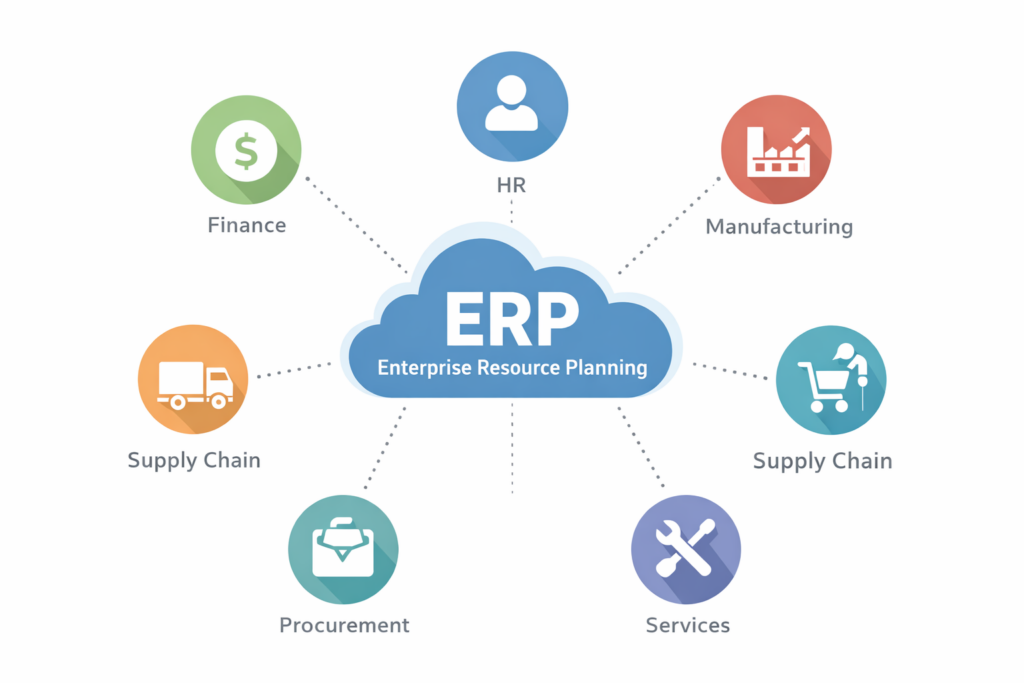
ERP (Enterprise Resource Planning) software manages core operations like finance, HR, manufacturing, supply chain, procurement, and services. It uses one unified system and shared database for real-time visibility.
ERP automates workflows to cut manual work and boost efficiency. It originated in manufacturing but now serves all industries with AI and machine learning for insights.
ERP Software Fundamentals
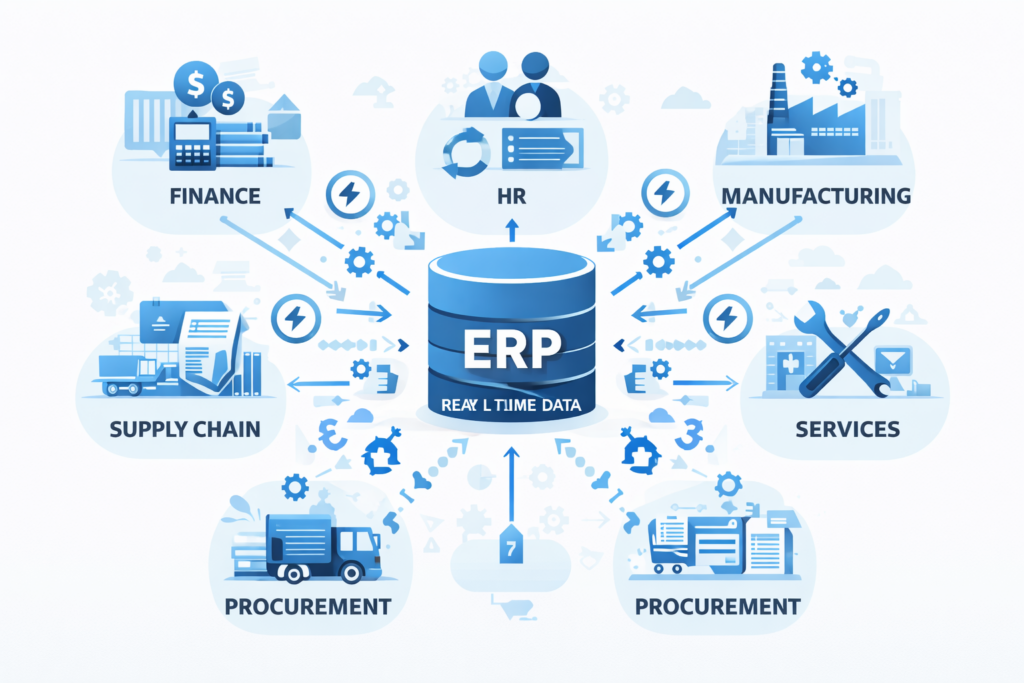
ERP connects departments via a shared database with real-time data. Modules for specific functions auto-share info, eliminating duplicates and errors.
A sales order instantly updates inventory, finance, and delivery. Modern ERP drives digital transformation by integrating custom systems.
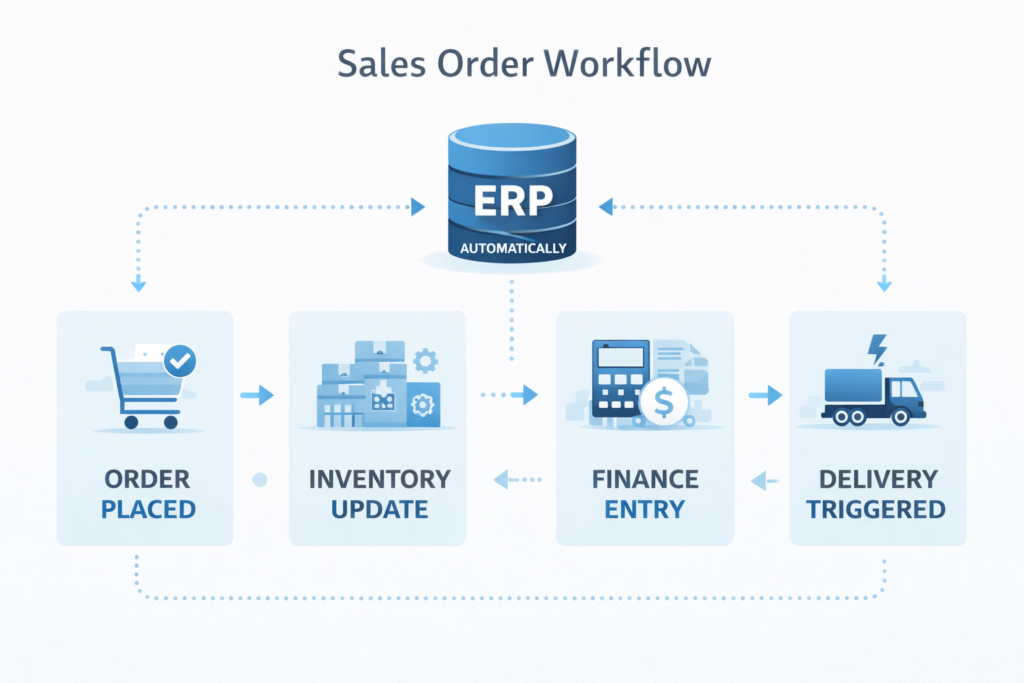
Additionally, procurement processes are triggered without manual effort. Originally, Enterprise Resource Planning software focused mainly on manufacturing operations. However, modern ERP now supports businesses across all industries. Today’s solutions also include AI and machine learning for better insights. Furthermore, ERP supports both internal operations and customer-facing activities. Because of this, ERP plays a key role in digital transformation. Consequently, ERP integration becomes essential for connecting custom and core systems.
ERP Systems – Key Features
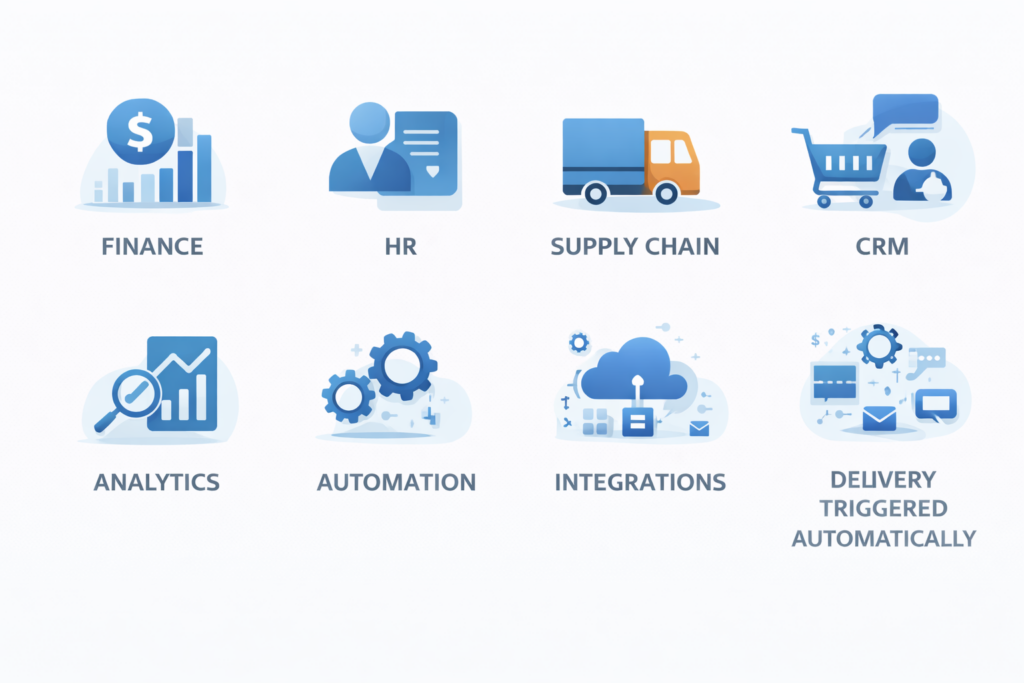
Strong ERP systems offer these core features for efficiency and scalability.
- Financial Management: Centralises accounting, budgeting, and forecasting.
- HR Management: Handles payroll, hiring, benefits, and performance.
- Supply Chain/Inventory: Tracks stock, purchasing, and suppliers.
- Project Management: Plans, tracks, and delivers projects.
- CRM: Manages leads, sales, and communication.
- Reporting/Analytics: Dashboards for insights and risks.
- Automation: Invoicing, approvals, compliance.
- Integrations: Links to third-party apps.
ERP evolves from an operational to a strategic tool.
ERP Types Comparison
Overall, ERP becomes a strategic platform, not just an operational tool.
Consequently, businesses achieve long-term growth with better control and efficiency.
Different Types of ERPs – Comparison
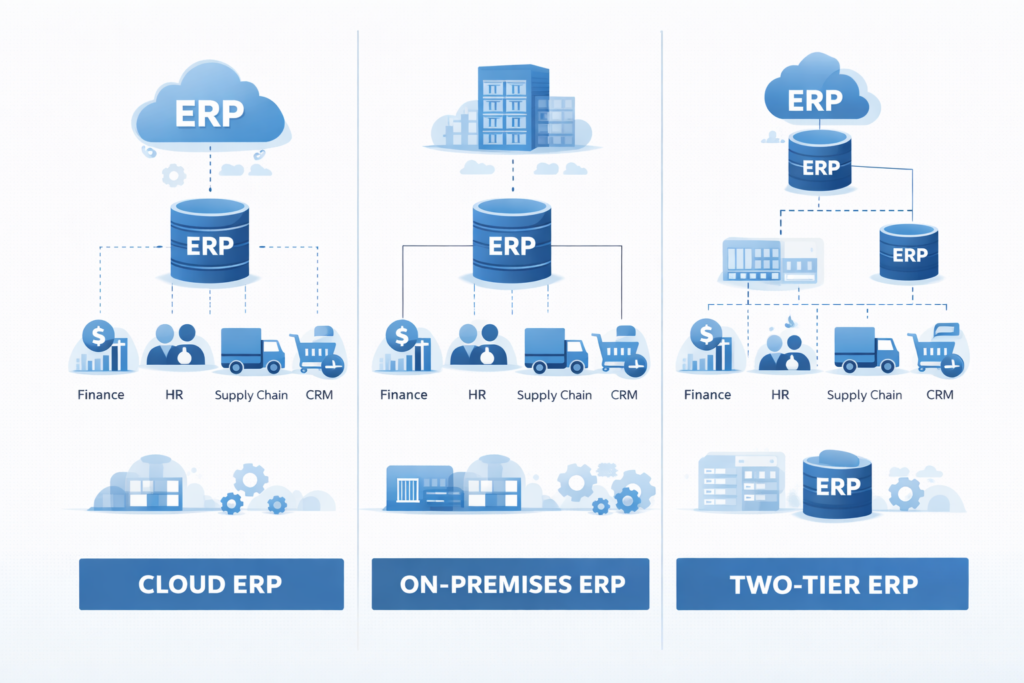
| Deployment Model | Definition | Pros | Cons | Best For |
|---|---|---|---|---|
| Cloud-Based ERP | Hosted on remote servers, internet access | Low upfront costs, fast setup, auto-updates, scalable | Hosted on remote servers, with internet access | SMBs to large, fast-growing firms |
| On-Premises ERP | Installed on company servers, internal management | Full data control, high customisation, security | High costs, maintenance, slow scaling, | High costs, maintenance, and slow scaling, |
| Two-Tier ERP | Tier 1 core ERP at HQ + Tier 2 lighter systems at subsidiaries | Cost savings, local flexibility, global visibility | Integration complexity | Multinational organizations with units |
| Hybrid ERP | Mix of on-prem and cloud | Flexibility, gradual migration | Management overhead | High costs, maintenance, and slow scaling, |
Key Benefits of ERP Software
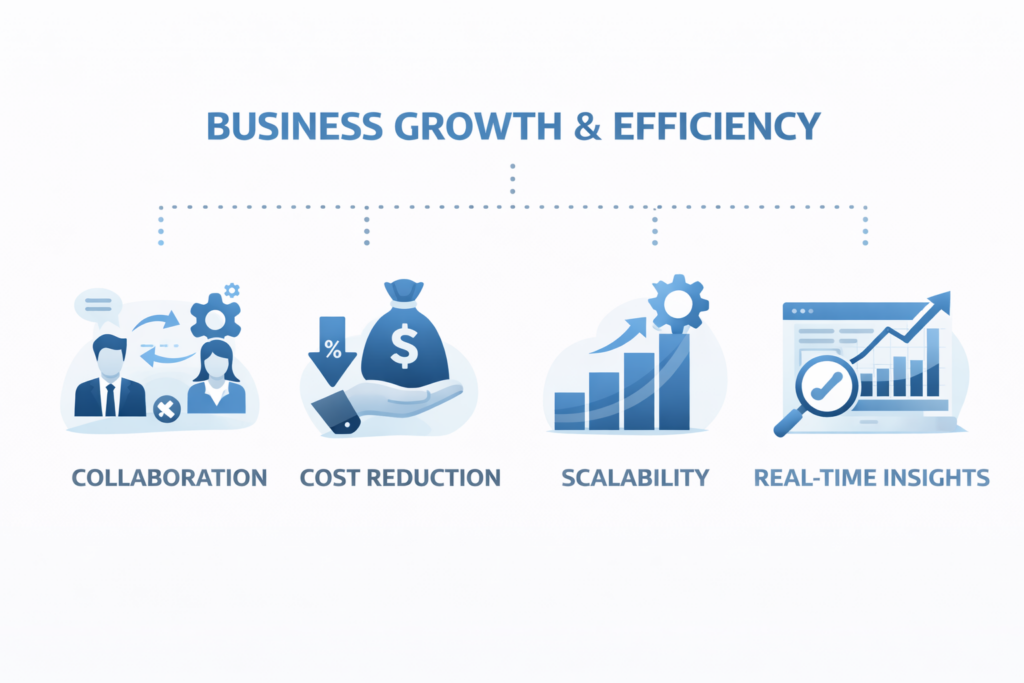
Implementing ERP can significantly improve how a business operates.
By centralising processes, ERP saves time and improves visibility.
As a result, companies make faster and smarter decisions.
- Improved Efficiency
ERP automates routine tasks and reduces manual work. - Better Collaboration
ERP stores data in one shared system for all teams. - Real-Time Insights
Managers get instant access to performance data. - Cost Reduction
ERP optimises resources and reduces errors and waste. - Scalability
ERP grows easily as business needs increase. - Enhanced Customer Service
ERP connects sales, inventory, and CRM data.
How ERP Systems Support Different Industries
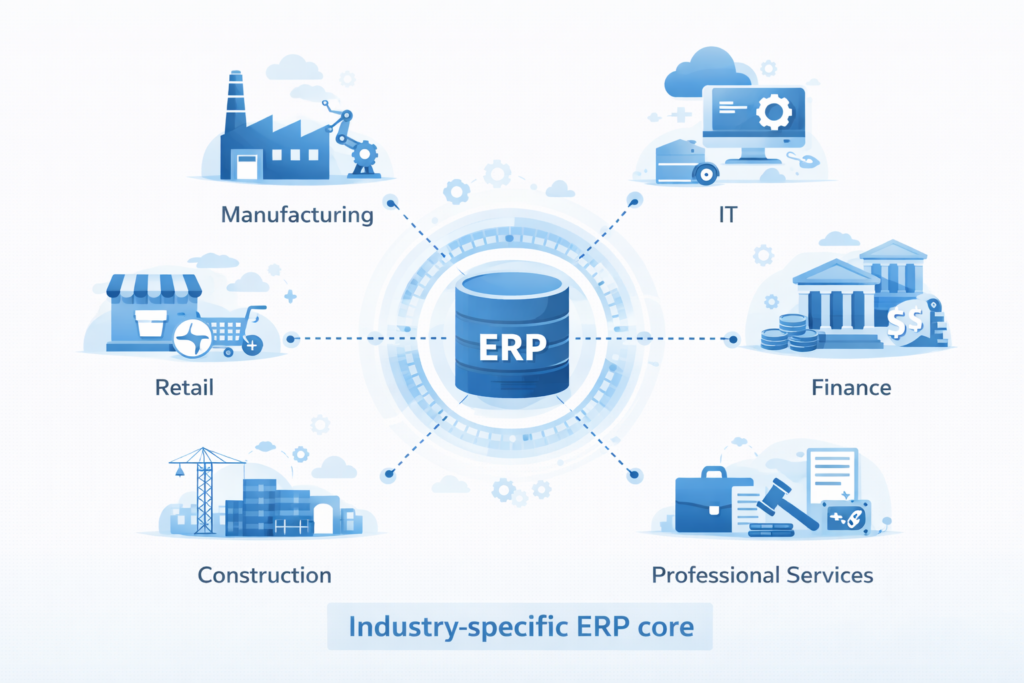
ERP software is flexible and adapts to different industry needs.
While the goal remains the same, usage varies by sector.
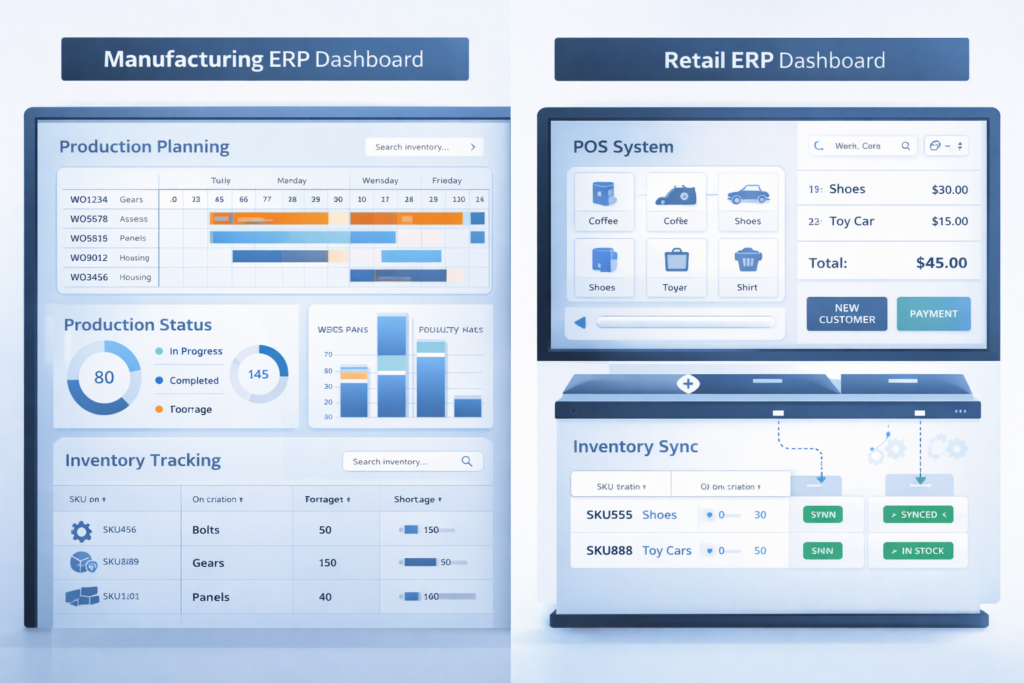
- Manufacturing
ERP optimises production, manages supply chains, and tracks raw materials. - Professional Services
ERP manages projects, resources, and billable hours efficiently. - Marketing
ERP automates workflows and improves project tracking. - IT Industry
ERP supports flexible resource planning and financial control. - Retail and E-commerce
ERP seamlessly connects sales, inventory, and customer data. - Construction
ERP tracks budgets, schedules, equipment, and workforce allocation. - Finance and Banking
ERP streamlines accounting, compliance, and reporting processes.
Overall, ERP delivers industry-specific solutions with one core goal.
That goal is better decisions and higher operational efficiency.
Current ERP Trends and Their Future Impact
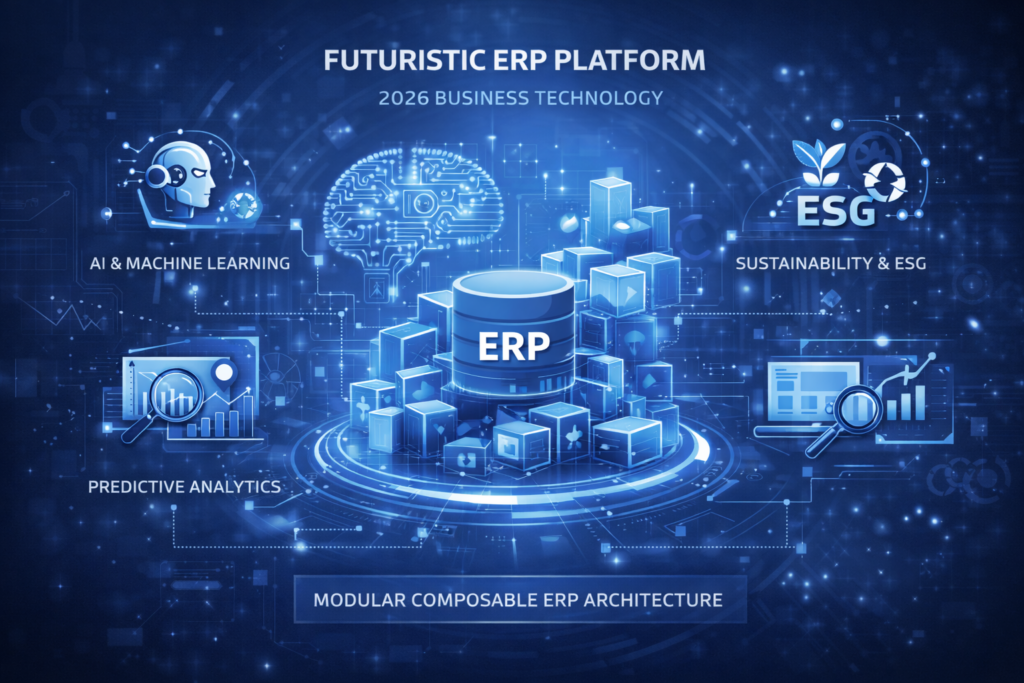
ERP is now AI-native for predictions and optimisation. Cloud/composable architectures dominate (70%+ revenue); industry-specific, ESG features, and low-code customisation grow.
Industry-specific ERP solutions are widely adopted to meet unique business requirements. As a result, implementation becomes faster with built-in compliance and best practices.
Additionally, composable ERP architectures allow modular and scalable system design. This flexibility helps businesses adapt without replacing entire systems.
Sustainability features are now standard due to stricter global regulations.
Consequently, ERP supports carbon tracking, ESG reporting, and responsible operations. Low-code and no-code tools empower users to customise workflows independently. Overall, ERP in 2026 emphasises agility, intelligence, and long-term resilience.

Final Words
ERP software is a strategic investment in operational efficiency and competitive strength. It unifies core processes into one platform, improving visibility, speed, and control. As a result, businesses operate more effectively in today’s digital economy.
Moreover, ERP goes beyond basic automation and daily task management.
It enables data-driven decisions, supports scalable growth, and drives digital transformation. Whether cloud, on-premise, or hybrid, informed ERP choices align with business goals.
However, successful ERP adoption requires planning, stakeholder alignment, and expert support. When implemented correctly, ERP reshapes how organisations manage and grow.
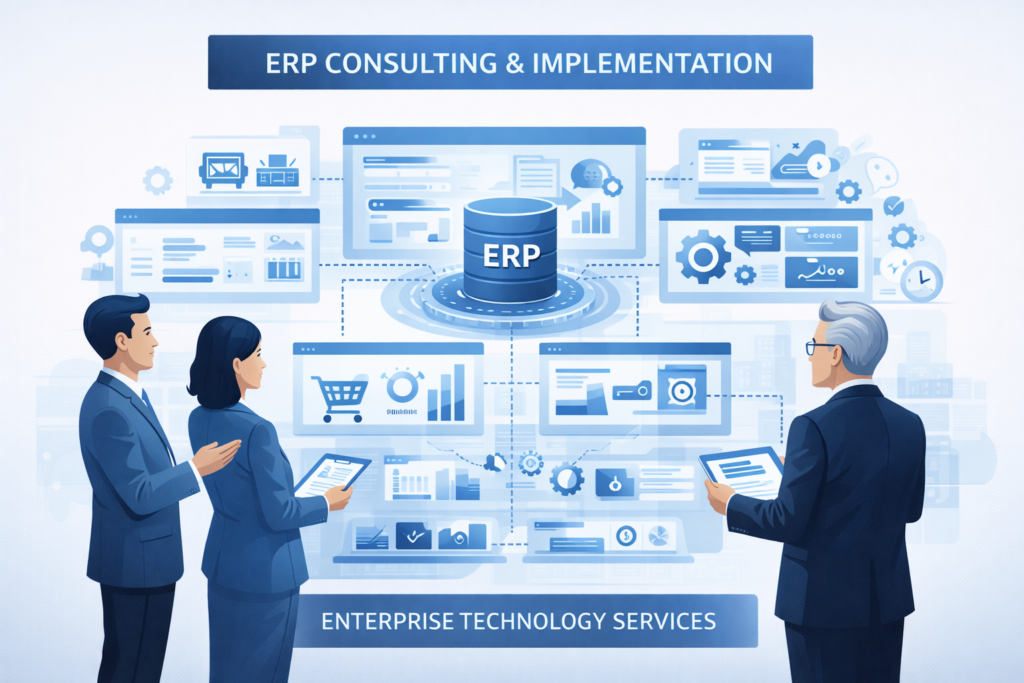
Ready to modernise operations? Our ERP Software Team delivers tailored ERP selection, implementation, and integration services tailored to your industry needs.
FAQs
Question: What is ERP software?
Answer: ERP (Enterprise Resource Planning) unifies finance, HR, supply chain, and more into one real-time platform, replacing spreadsheets for growing businesses.
Question: Cloud vs On-Premises ERP: Which is best?
Answer: Cloud offers low costs/scalability for SMEs; on-premises suits regulated industries needing control. Hybrid/Two-Tier for multinationals.
Question: What are ERP’s key benefits?
Answer: Centralised data, automation, real-time insights, cost savings, scale operations 2-3x efficiently.
Question: Which industries use ERP?
Answer: Manufacturing, retail, services, construction-all adapt core modules to sector needs.